

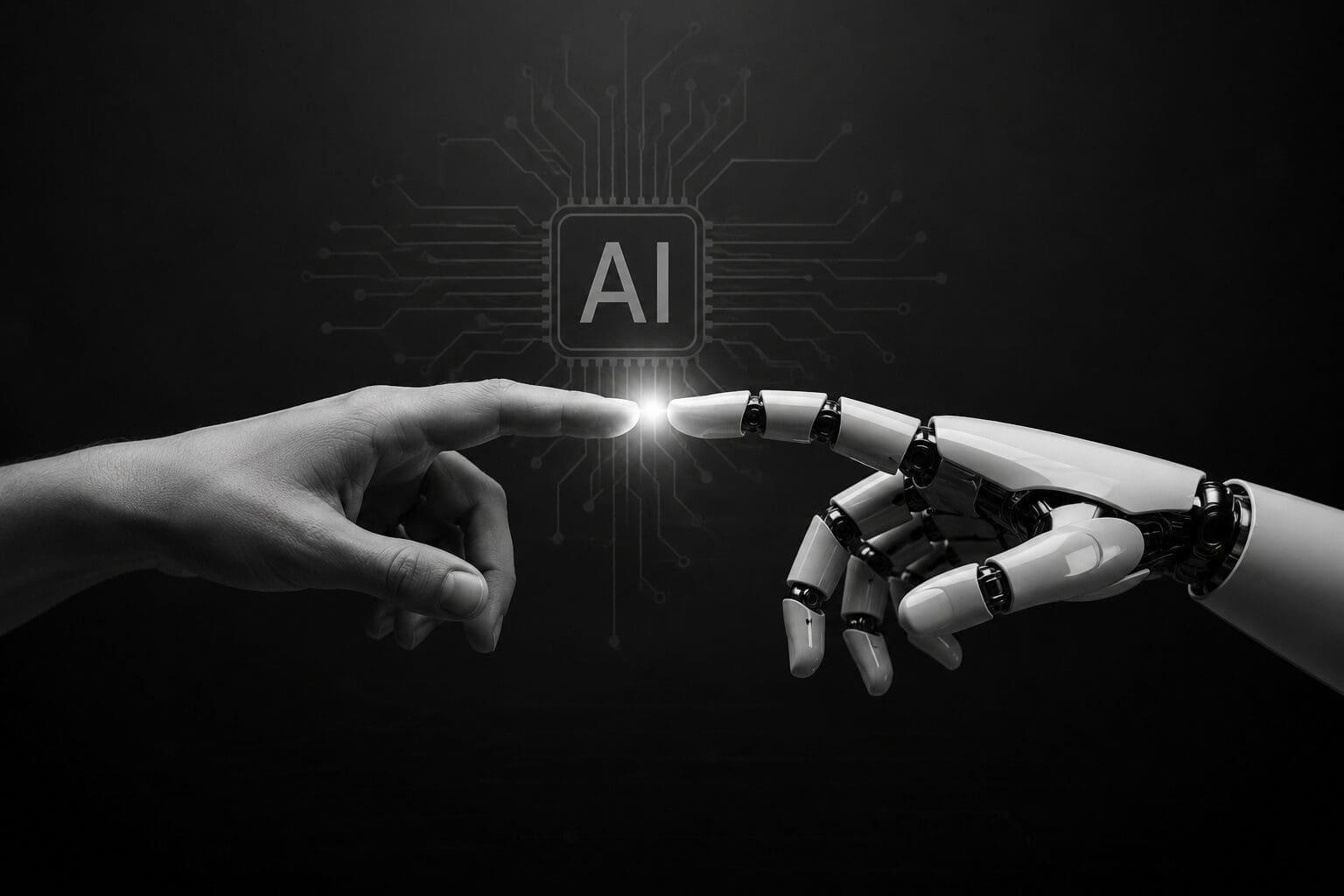
Somewhere around 40% of teens have now turned to an AI chatbot for emotional support. Not as a joke, not as a novelty — as an actual place to process what they’re feeling.
And look, that number isn’t surprising. AI is available at 2am. It doesn’t judge you. It doesn’t have a six-week waitlist or a copay. Of course people are using it.
But “available” and “helpful in the moment” isn’t the same as “equipped to actually help.” Let’s talk about where AI genuinely earns its keep — and where it absolutely does not.
What AI Is Actually Good At
Give credit where it’s due. There are real, legitimate reasons people reach for a chatbot when they’re struggling:
Venting without judgment. Sometimes you don’t need advice. You need to get the spiral out of your head and onto a page (or a screen). AI is a low-stakes place to do that — no fear of burdening a friend, no worry about how you’re being perceived.
Organizing your thoughts. “I feel like everything is a mess” is hard to act on. AI can help you sort that mess into something more specific: what actually happened, what you’re feeling about it, what’s in your control. That kind of structure can genuinely lower the temperature on an overwhelming moment.
Practicing a hard conversation. Rehearsing what you want to say to a boss, a partner, or a parent before you actually say it? AI is a decent low-pressure sounding board for that.
Filling the gap between “I need help” and “I have access to help.” If therapy isn’t available to you right now — financially, logistically, or otherwise — AI can be a bridge, not a destination. It can help you feel less alone in the waiting period, which matters.
None of this is nothing. It’s just not therapy.
What AI Cannot Do
Here’s where the line actually is.
It cannot diagnose you. A real clinician considers your history, your patterns, your relationships, your body, your context — not just the words you typed in a chat box.
It cannot intervene in a crisis. This is the big one. A therapist can escalate. They can call someone. They know when a conversation needs to become an emergency response instead of a conversation. AI does not have that capability.
It cannot hold you accountable over time. Therapy works partly because someone is tracking your patterns across weeks and months — noticing repeated avoidance, remembering what you said three sessions ago that contradicts what you’re saying now.
It cannot replace the relationship itself. A huge part of therapy’s effectiveness is the relationship — being known, being challenged by someone paying attention to you specifically. That’s not something a chatbot can replicate.
The Actual Takeaway
AI is a fine tool for venting, organizing your thoughts, or practicing a hard conversation. It is not a diagnostic tool, it is not equipped for crisis moments, and it cannot hold you accountable the way an actual person can.
If you’re using AI as a bridge while you wait for real support, or as a supplement alongside therapy you’re already in — that’s reasonable. If it’s become the only place you’re processing something serious, that’s worth noticing.


Read the Comments +